Speed, written into the contract
Mobile Lighthouse scores on agreed pages are a target in the contract, and the report comes with the handover.
90+ on a landing-page build
Fardin Omor Afnan · Frontend engineer for SaaS teams
Landing pages, product UI and component systems for SaaS startups and design studios — in React, Next.js and TypeScript, with performance and accessibility built in from the first commit.
Experience
Each step shows how my scope and ownership grew — and the stack underneath grows with it, so you can see what entered the work and when.
Frontend Engineer
Building modern web apps and revamping existing products for improved usability.
Stack by this point3
Frontend Developer
Designing and implementing dynamic, user-friendly interfaces with a focus on responsiveness and smooth interactions.
Stack by this point7
Frontend Engineer
Building mobile-first clinic discovery and booking experiences, with a focus on interaction polish and navigation that holds together across a flow.
Stack by this point10
The edit
A first draft has everything on it. I take things out until one idea and one action are left — put any of it back to see what it costs.
An example landing page for a made-up invoicing product, Tidy, edited from a first draft down to its headline, one line and one button. Each part taken out is listed as a button that puts it back.
Taken out
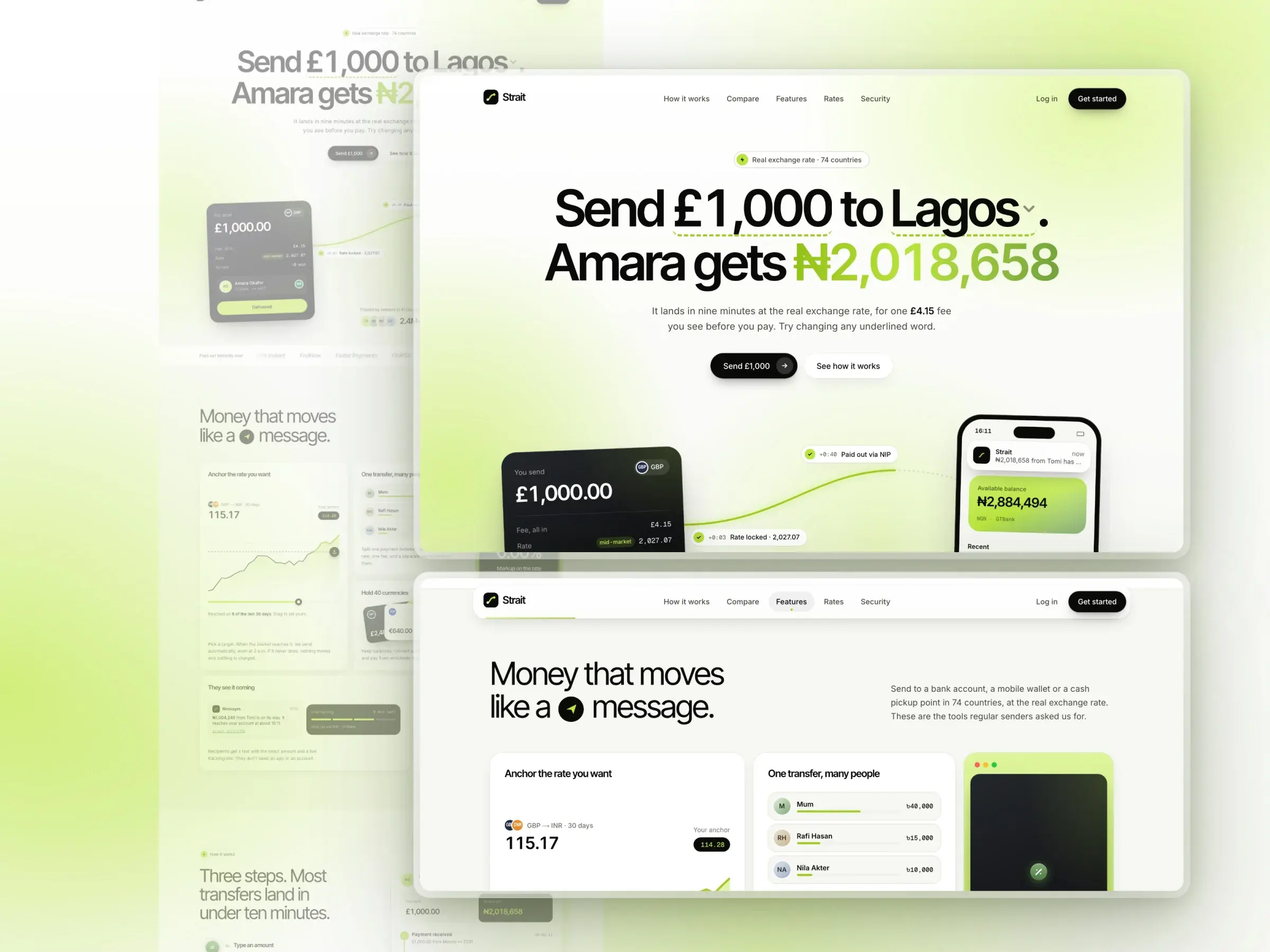
Strait · Fintech landing page
A headline that counts.
A money-transfer page whose headline is the calculator: change the amount or the city and the payout counts to its new value.
Selected work
06 / 22
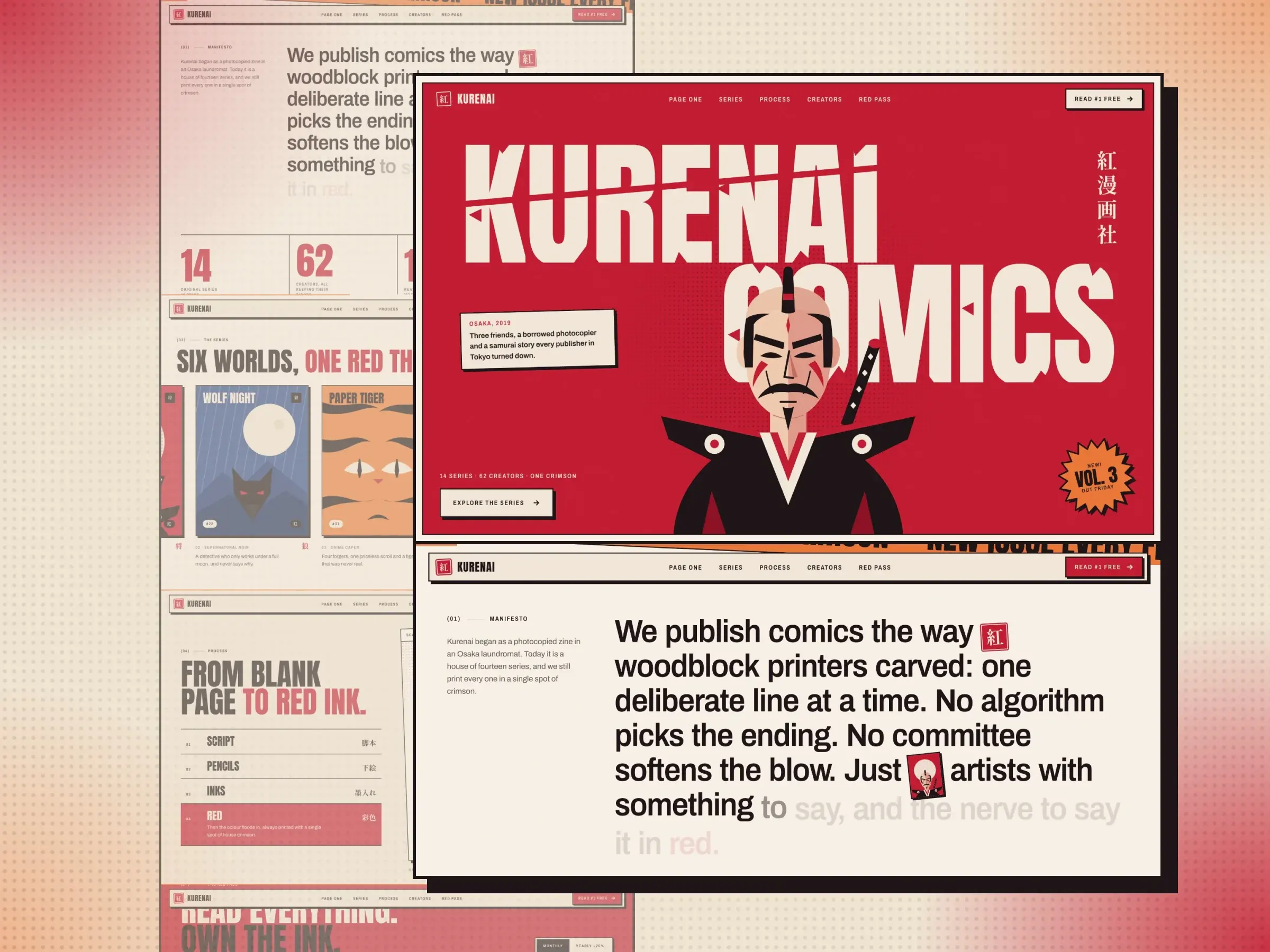
KurenaiComic publisher landing page
StraitFintech landing page
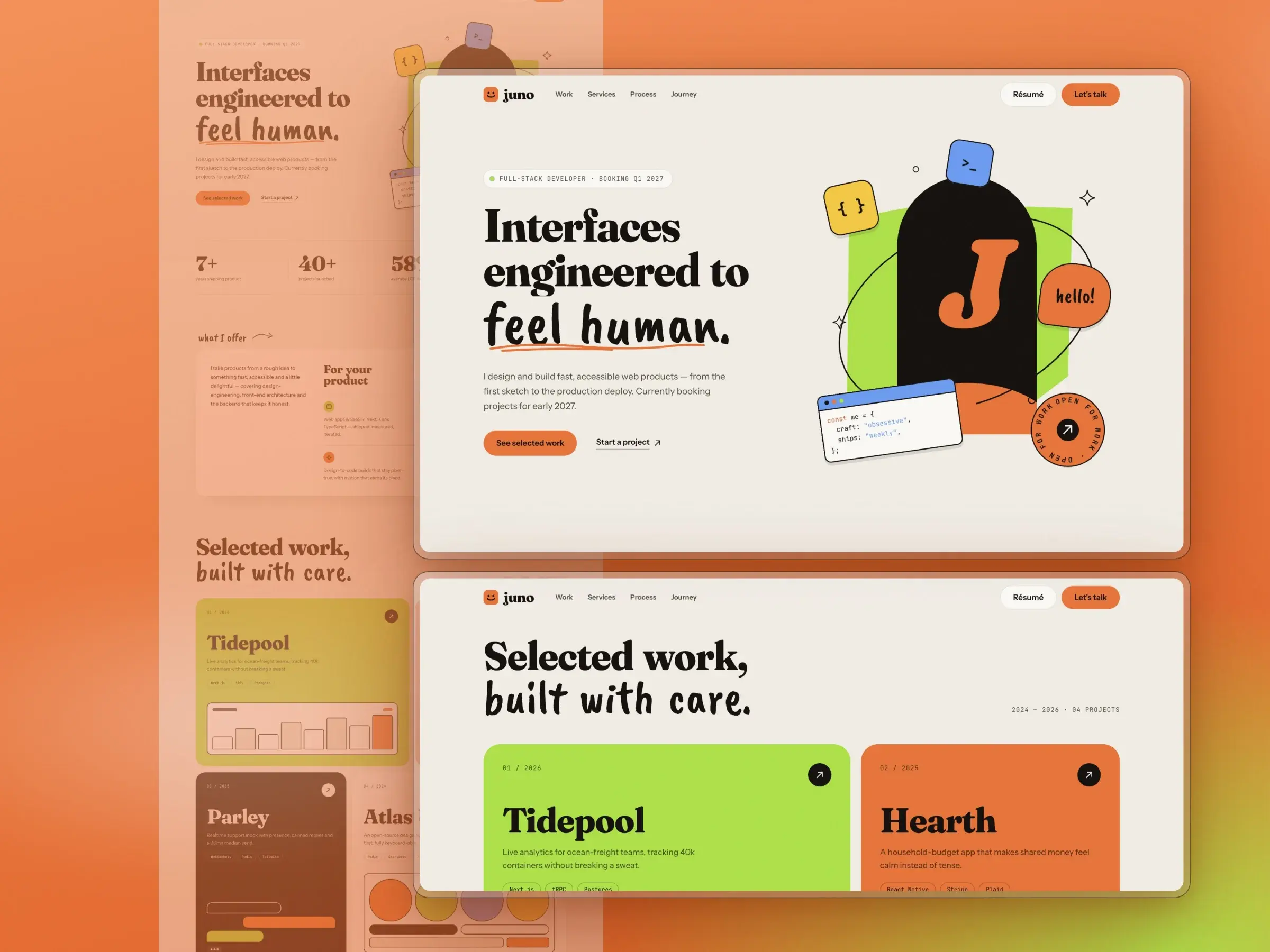
JunoDeveloper portfolio
PlinthSaaS landing page
SereinAI SaaS landing page
ArterialFleet SaaS landing page
22 landing pages for SaaS, fintech, publishing, healthcare and studios that I designed and built in Next.js. Open any one to fan out its shots.
One line each
16 products, each built around one line — designed and built end to end, in React, Next.js and TypeScript.
Kerr · Photonic inference cloud landing page
Scroll, drag or use ↑ ↓ to turn itScroll to turn it, or tap a line
The rule
Performance and accessibility go into the contract, so “fast” is something you can check at handover — not something promised after launch.
How I build
Performance and accessibility built in from the first commit — the parts of a frontend you can measure, and the hours you can reach me.
Mobile Lighthouse scores on agreed pages are a target in the contract, and the report comes with the handover.
90+ on a landing-page build
Based in Dhaka on GMT+6. I overlap the UK working day, and US East Coast teams wake up to the handoff.
Dhakame
--:--
London
--:--
New York
--:--
The UK working day, in each city’s hours
Visible focus on every control, labels for screen readers, AA contrast on text.
Every animation has a finished state for people who turn motion off. Try it.
Motion off
In use every day, at Kiip Corp.
Process
Every project runs the same way, so the price, the start date and what you sign off are settled before any work begins.
A fixed price and a timeline, agreed in writing first. You pay for deliverables, not hours.
I take one project at a time, so the 50% deposit is what books your start date.
You approve each milestone on a staging link — on your own phone, not in a slide deck.
The code, the deploy and the Lighthouse report. Mobile scores on agreed pages are written into the contract, so you check them at handover.
About
What has to be true on a slow phone and in a screen reader decides how I build — so here I am, read all three ways.

Frontend Engineer · Dhaka, Bangladesh
Taking new projects
3+ years building product interfaces across three teams. Based in Dhaka on GMT+6: I overlap the UK working day, and US East Coast teams wake up to the handoff.
The card as it’s meant to be seen.
FAQ
The questions a first call usually starts with — answered here first, in my words.
Fardin Omor Afnan
Taking new projects
0 / 7
Hi, I’m Fardin. These are the questions most first calls start with — pick one.
Ask
Answers written by me, not generated.
Send the link, the deadline and what’s hard about the front of it right now. I take one project at a time, so the start date is booked when the deposit lands — and I reply within one working day.